The Giudicarie: The Historic District of Val Rendena
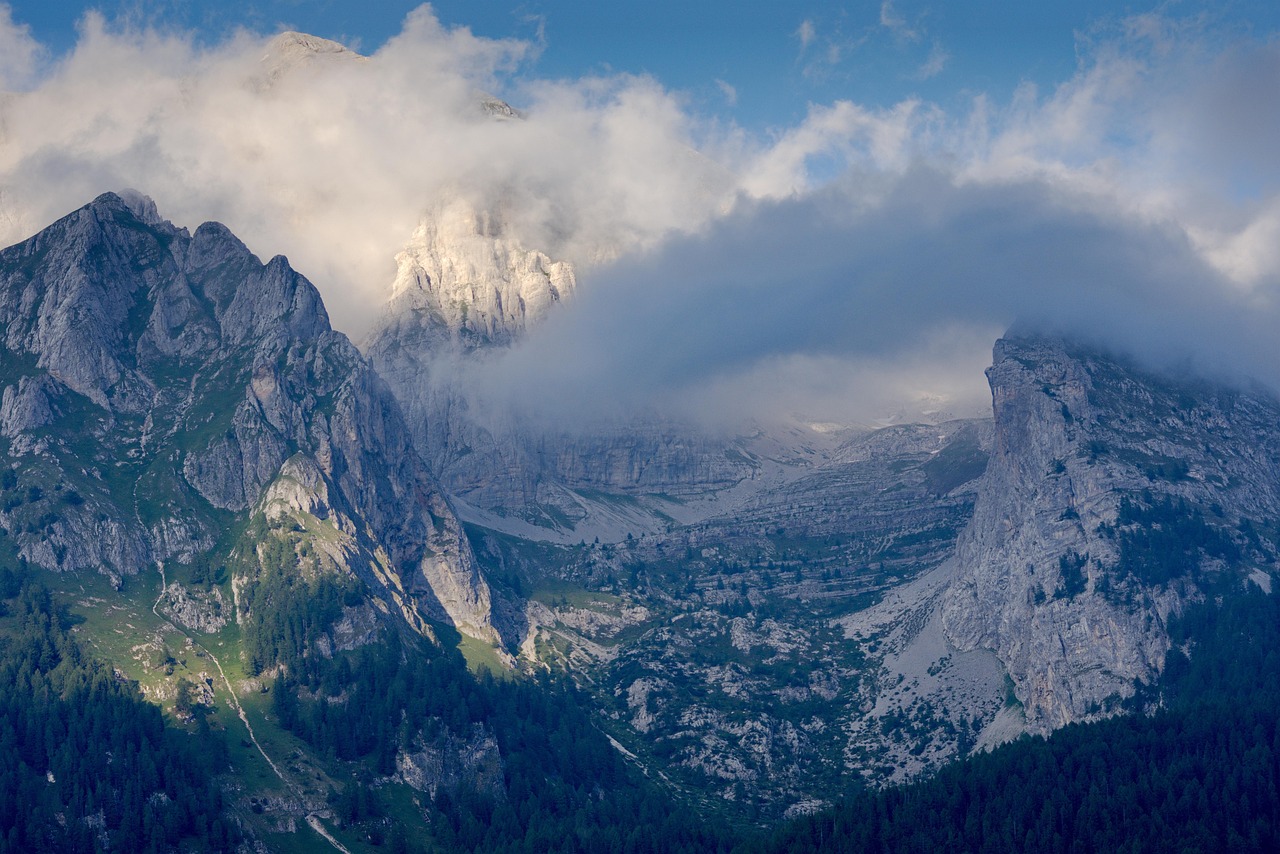
The name "Giudicarie" immediately evokes the medieval world and its institutions: it derives from the "judges" (iudices) who administered justice and governed these territories during the Middle Ages on behalf of the Prince-Bishopric of Trento. The Giudicarie constitute a vast historic district of western Trentino that embraces an extensive and varied territory, from the snow-capped peaks of the Adamello massif and the Dolomiti di Brenta to the northern shores of Lake Garda.
The Giudicarie: Origins of a Name and a Territory
The name "Giudicarie" immediately evokes the medieval world and its institutions: it derives from the "judges" (judices) who administered justice on behalf of the Prince-Bishopric of Trento. This historic district, nestled between the Dolomiti di Brenta and the Adamello-Presanella massif, encompasses a vast territory that includes Val Rendena, Val del Chiese, the Sarca Valley, and the Bleggio Plain.
The Giudicarie represent one of the most fascinating examples of Alpine administrative autonomy, a system of governance that for centuries guaranteed mountain communities a degree of freedom and self-determination unthinkable in many other regions of Europe. Their history is a tale of resilience, adaptation, and ingenuity that shaped the identity of an entire territory, leaving a cultural heritage that can still be felt today in local mentality and traditions.

Historical Division: Outer and Inner Giudicarie
The Giudicarie district was traditionally divided into two large areas, each with distinct geographical, economic, and cultural characteristics:
- Outer Giudicarie — the southern part, comprising Val del Chiese, the Bleggio Plain, the Lomaso Valley, and the Tione area. This sector was more open toward the plains and Lake Garda, favoring trade and cultural contacts with the Po Valley world
- Inner Giudicarie — the northern part, which includes Val Rendena and the side valleys up to Madonna di Campiglio. A more Alpine and isolated area, characterized by a predominantly pastoral economy and strong community cohesion
This division was not merely geographical but also reflected deep economic, cultural, and dialectal differences between the communities of the two areas. The Inner Giudicarie, more mountainous and isolated, maintained archaic traditions longer, a closer bond with Alpine life, and more conservative dialects. The Outer Giudicarie, on the other hand, developed a more diversified economy and more intense relationships with urban centers in the valley floor.
Political Organization: The System of Judges
The administrative system of the Giudicarie was based on the figure of the judge, an official appointed by the Bishop of Trento with responsibilities for civil governance and the administration of justice. Unlike other feudal territories of the era, where power was concentrated in the hands of a single lord, the Giudicarie had an articulated system of institutional checks and balances:
- The Carte di Regola — written community statutes that regulated the use of collective resources (forests, pastures, waters) with precise rules and sanctions for transgressors
- The neighborhood assemblies — periodic meetings of household heads who decided on the most important local issues by majority vote
- The mayors and regolani — representatives elected by communities for the ordinary management of public affairs
- Customary law — norms passed down orally from generation to generation that regulated daily life and relationships between families
This system ensured a balance between central authority and local autonomy that many historians consider a precursor to modern forms of self-governance in Trentino-Alto Adige, whose special autonomy has its roots precisely in this long tradition of self-administration.
Economy and Society in the Historic Giudicarie
The Giudicarie economy was characterized by a strong dependence on mountain agriculture and livestock farming. The history of Val Rendena shows how cattle breeding was the main activity, with the famous Rendena breed constituting the wealth of farming families and being sold at fairs throughout Trentino and the Veneto.
The main economic activities included:
- Cattle farming with seasonal transhumance to high-altitude alpine pastures from June to September
- Dairy production — cheeses, butter, and ricotta processed in cooperative dairies, where each family contributed milk in rotation
- Forestry — cutting and processing timber from communal forests, a fundamental resource for construction and heating
- Craftsmanship — woodworking, ironwork, and stonework, with workshops serving the entire community
- Seasonal emigration — many men departed in winter to work as masons, sawyers, or street vendors in the cities of the plains
The Artistic Heritage of the Giudicarie
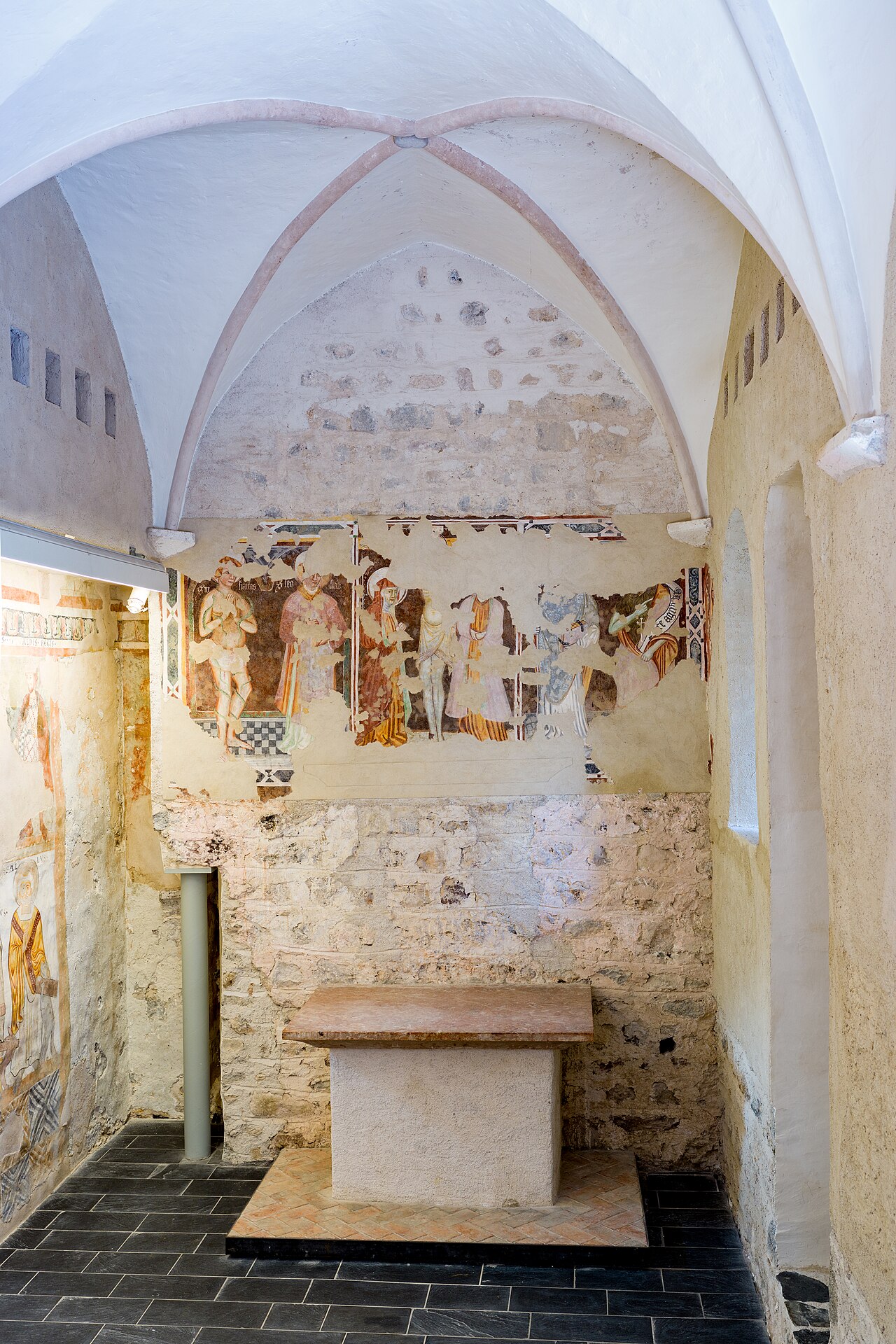
Despite their peripheral position relative to the great centers of power, the Giudicarie preserve an artistic heritage of great value and variety. The valley's churches contain frescoes created by the Baschenis, the celebrated family of itinerant painters who worked throughout the region between the 15th and 16th centuries, leaving masterpieces of popular sacred art. Among the most important works in the territory:
- The Dance of Death in Pinzolo — an absolute masterpiece of Alpine macabre art, 21 meters long
- The frescoes of Santo Stefano in Carisolo — pictorial cycles of great refinement and chromatic vivacity
- The Romanesque churches scattered throughout the villages, with portals carved in local stone and distinctive bell towers
- The medieval castles and towers, such as Castel Stenico and Castel Romano, testifying to the territory's defensive system
- The noble palaces of the main centers, with frescoed facades and Renaissance architectural details
The Giudicarie Today: Identity and Future
Today the Giudicarie form the Community of the Giudicarie, a territorial body of the Autonomous Province of Trento that groups numerous municipalities into a single administrative structure. The historical heritage of this district is reflected in the strong local identity and sense of belonging of the communities, which continue to preserve traditions, dialects, ancient knowledge, and a special relationship with the mountain territory.
The Giudicarie territory offers visitors a unique experience that harmoniously combines nature, history, and culture. From the Adamello Brenta Nature Park to the waterfalls of Val Genova, from medieval villages with their stone squares to world-class ski slopes, the Giudicarie represent one of the most complete and fascinating areas of Trentino, where the Sarca River continues to flow as a connecting thread between past and present, uniting the different souls of an extraordinary territory.