The Dolomiti di Brenta: UNESCO Heritage in the Heart of Trentino
The Dolomiti di Brenta, a UNESCO World Heritage Site since 2009, are the only Dolomite group located west of the Adige River. Discover the great peaks, the famous Bocchette via ferrata routes, the historic refuges, and the rich biodiversity of this extraordinary massif.
The Only Dolomite Group West of the Adige
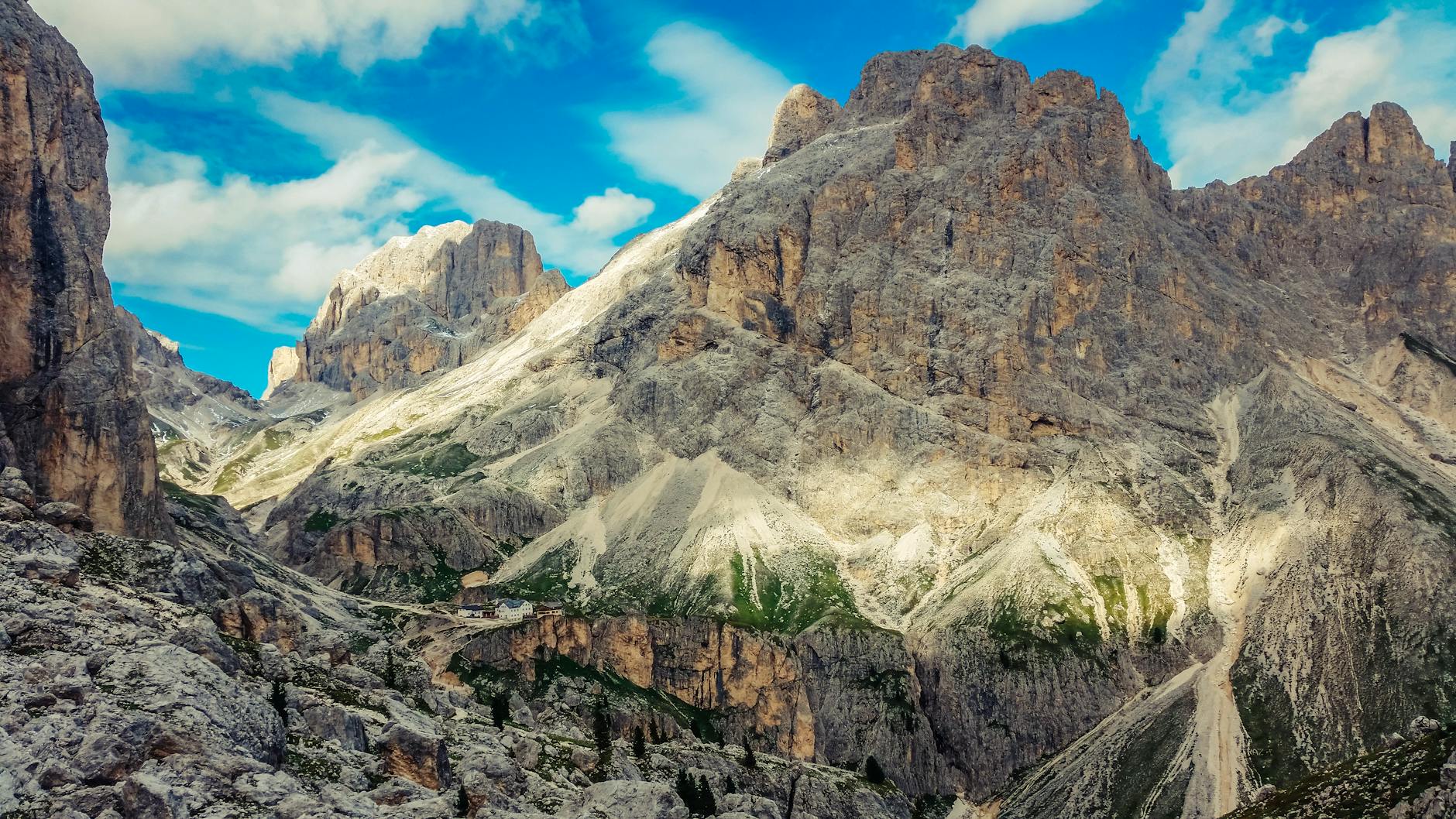
The Dolomiti di Brenta constitute a mountain massif unique in the Alpine geological landscape: they are the only Dolomite group located west of the Adige River, separated from the other Dolomite groups and surrounded by rocks of a completely different nature. This geographical peculiarity makes them an island of dolomite — the characteristic pale rock named after the French naturalist Deodat de Dolomieu — immersed in a context of granites, porphyries, and crystalline schists.
In 2009, the Dolomiti di Brenta were inscribed on the UNESCO World Heritage List, along with the other eight Dolomite systems. The group extends for approximately 40 kilometers north to south and about 12 kilometers in width, dominating the horizon of Val Rendena to the west and Val di Non to the east with its towers and spires. Key facts about the massif:
- Extent — approximately 40 km in length and 12 km in width
- Highest peak — Cima Tosa at 3,173 meters
- UNESCO recognition — since 2009, as part of the Dolomites
- Protected area — entirely within the Adamello Brenta Nature Park
- Alpine refuges — an extensive network of over 10 historic refuges

The Great Peaks: Cima Tosa, Cima Brenta, and Campanile Basso
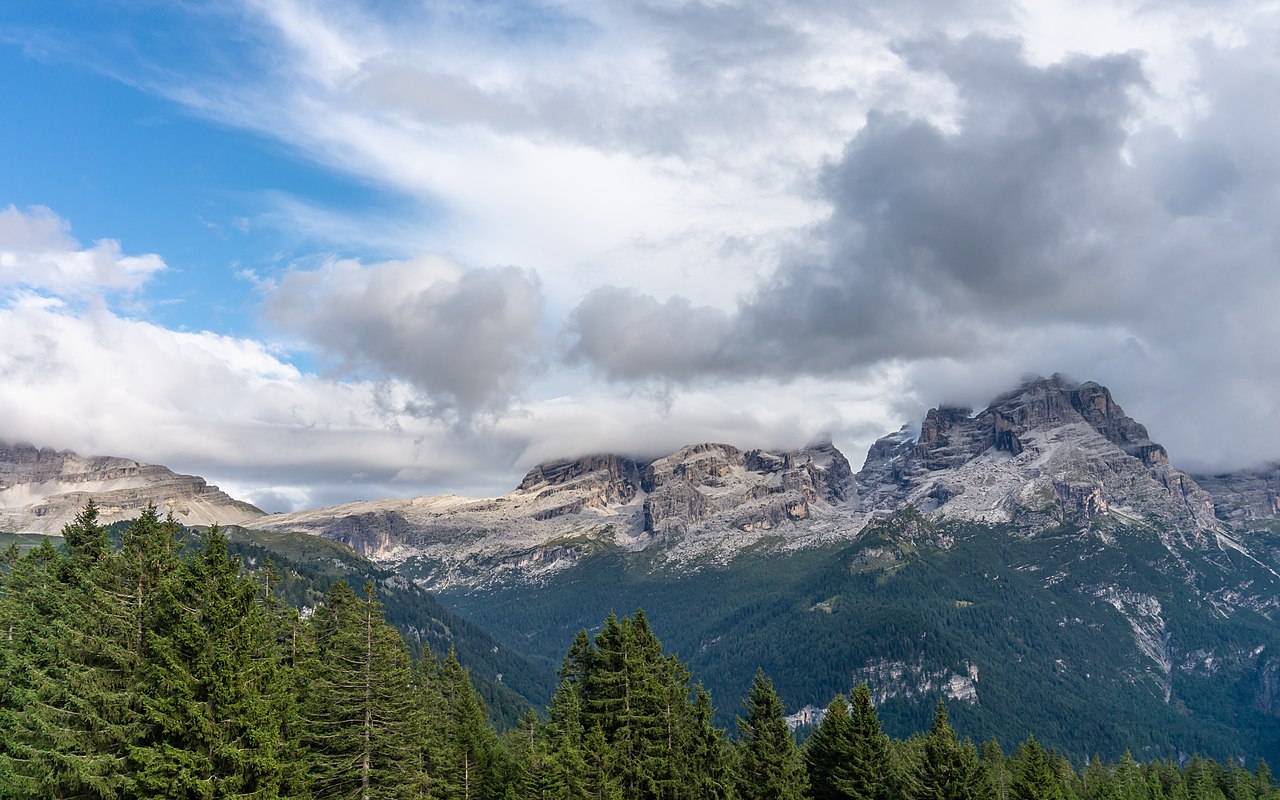
The Brenta Group counts among its peaks some of the most iconic summits in Dolomite mountaineering. The highest peak is Cima Tosa, reaching 3,173 meters and dominating the entire group with its imposing bulk, often crowned by clouds. At a short distance rises Cima Brenta (3,150 m), with its unmistakable pyramidal shape.
But the peak that more than any other has made mountaineering history is the legendary Campanile Basso (2,877 m), a vertical rock tower approximately 300 meters high from base to summit, first conquered in 1899 by mountaineers Otto Ampferer and Karl Berger. Other peaks of great significance include:
- Crozzon di Brenta (3,122 m) — its north face is among the most challenging in the Dolomites
- Cima d'Ambiez (3,102 m) — an elegant rocky pyramid
- Cima Margherita — a classic destination for expert mountaineers
- Castelletto Inferiore — a natural climbing gym
The Bocchette Via Ferrata: The Path in the Sky
The Brenta Group is famous in the world of Alpine hiking for its extraordinary system of via ferrata routes, known as the Bocchette Trail. This equipped route, among the longest and most spectacular in the entire Alpine arc, crosses the heart of the Dolomite group connecting the main refuges through exposed ledges, metal ladders, suspended bridges, and sections of climbing assisted by steel cables.
The complete route is divided into several sections: the Central Bocchette, the Upper Bocchette, the SOSAT Trail, and the Benini Trail. The full traverse requires several days and a good level of fitness. The panoramic views extend from the vertical walls of the Brenta to the glacial expanses of the Adamello-Presanella. Those who ski in Val Rendena in winter can return in summer to discover these same mountains on foot.
Alpine Refuges: Hospitality at Altitude
An extensive network of alpine refuges allows visitors to explore the Dolomiti di Brenta safely and in comfort. Among the most famous and historic:
- Rifugio Tuckett (2,272 m) — founded in 1906, named after the English mountaineer Francis Fox Tuckett
- Rifugio Brentei (2,182 m) — in an extraordinary position at the foot of the Crozzon di Brenta
- Rifugio Pedrotti alla Tosa (2,491 m) — the highest in the group, a base for Cima Tosa and the Bocchette
- Rifugio Agostini — in the heart of Val d'Ambiez
- Rifugio XII Apostoli — in a spectacular panoramic position
The refuge season generally runs from mid-June to late September, and early booking is strongly recommended in July and August. Every refuge offers dishes from the Trentino tradition prepared with local ingredients.
Dolomite Geology: A 250-Million-Year Story
The Dolomiti di Brenta tell a fascinating geological story that begins approximately 250 million years ago, during the Triassic period, when the area was occupied by a shallow tropical sea. The calcareous sediments deposited on the floor of that ancient sea transformed into the dolomite that today forms the vertical walls and spires of the group. The tectonic processes that uplifted the Alps carried these marine rocks to over 3,000 meters elevation, creating a landscape that has been described as "the most beautiful open-air geological laboratory in the world". It was precisely this scientific value that contributed to the 2009 UNESCO recognition, which certified the Dolomites as heritage of all humanity.
Karst phenomena are widespread throughout the group: caves, sinkholes, and springs testify to the slow work of water on calcareous rock. To fully understand the territorial context in which these mountains exist, it is worth exploring the Giudicarie district, where geology and human history have been intertwined for millennia.
Flora, Fauna, and the Bear of the Brenta
The Dolomiti di Brenta, entirely within the Adamello Brenta Nature Park, host extraordinary biodiversity. The Dolomite flora is particularly rich thanks to the calcareous nature of the soil: among the most characteristic species we find the edelweiss, Clusius's gentian, potentilla nitida which colors the high-altitude scree pink, and the rock rampion.
The fauna includes a stable population of chamois, easily observable on the ledges, as well as successfully reintroduced ibex, marmots, stoats, and raptors such as the golden eagle and the bearded vulture. But the symbolic animal of the Brenta is the brown bear, reintroduced through the Life Ursus project starting in 1999. To discover the full naturalistic richness of the area, read our article on the Adamello Brenta Nature Park. And to learn about the artistic side of the valley that embraces these mountains, don't miss the article on the Dance of Death in Pinzolo.