The History of Val Rendena: From the Bronze Age to the Present Day
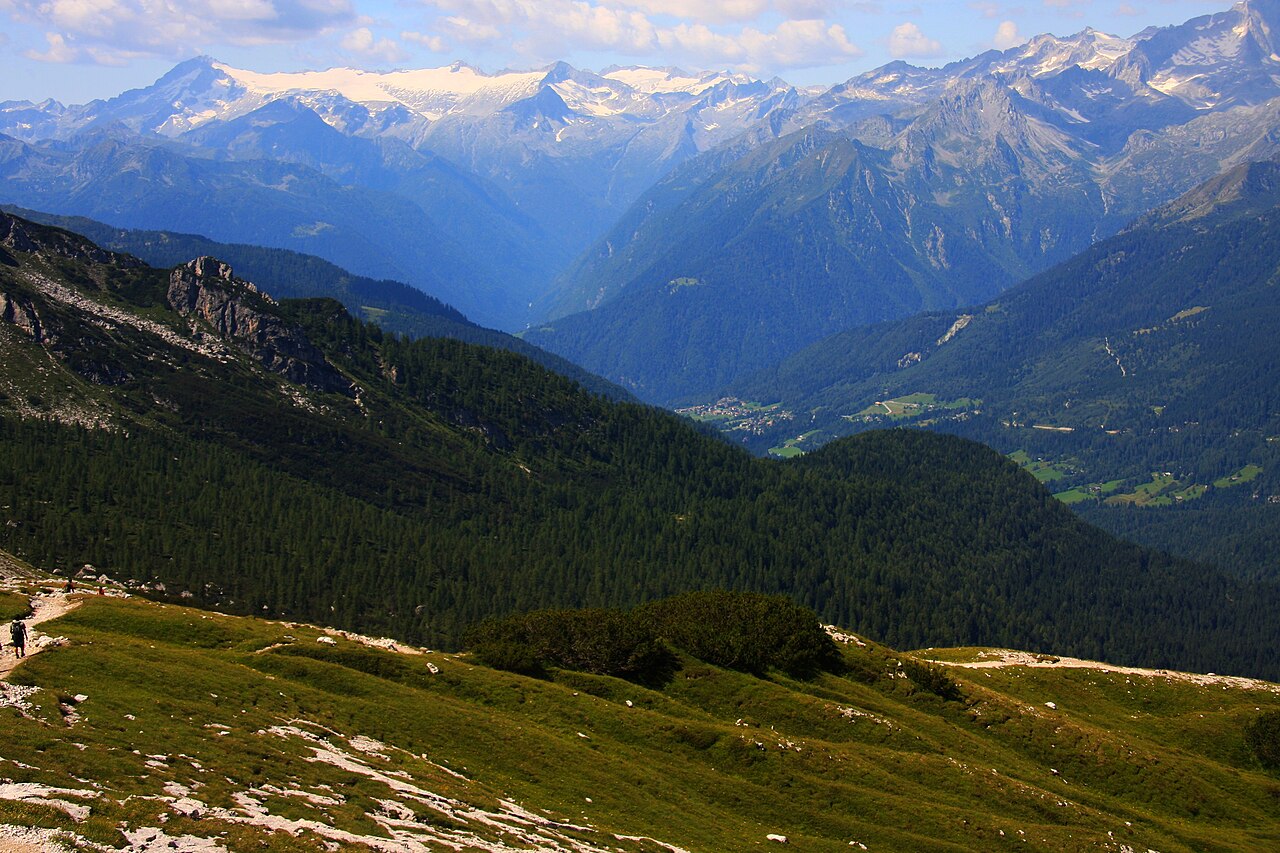
The history of Val Rendena has its roots in a remote past, long before the Roman era. Archaeological findings in the localities of Verdesina and Massimeno attest to the presence of human settlements since the Bronze Age (approximately 2000-900 BC).
Ancient Origins: From the Bronze Age to Pre-Roman Peoples
The history of Val Rendena has its roots in a very remote past, predating writing and historical documents by millennia. Archaeological findings from the Bronze Age attest to the presence of human settlements in the valley as early as the 2nd millennium BC, when small groups of shepherds and hunters traversed the trails between the Dolomiti di Brenta and the Adamello massif, following seasonal wildlife migrations and exploiting high-altitude pastures during the summer months.
The main evidence of prehistoric human presence includes:
- Bronze artifacts found near Pinzolo and Carisolo, including ceremonial axes and daggers
- Rock engravings on erratic boulders along the valley floor, featuring solar symbols and anthropomorphic figures
- Hearth remains in rock shelters in the side valleys, radiocarbon dated
- Flint arrowheads found on Alpine passes, testifying to the passage of hunters and traders
Before the Roman conquest, the territory was probably inhabited by Raetian peoples, Alpine populations of pre-Indo-European origin who had developed a refined material culture and a system of trade exchanges along the Alpine pass routes.
The Roman Era and Christianization
With Rome's expansion toward the Alps in the 1st century BC, Val Rendena also came within the orbit of Roman civilization. The valley was never a primary strategic center, but it served as a transit route between the Po Valley and the territories beyond the Alps. Romanization brought new agricultural techniques, improved communication routes, and the introduction of Vulgar Latin, from which the local dialects still retain traces of the ancient language today.
The Christianization of the valley is linked to the legendary figure of Saint Vigilius, Bishop of Trento, who according to tradition was martyred in Val Rendena around 405 AD, killed by pagans while attempting to evangelize the mountain populations. The cult of Saint Vigilius became the foundation of the religious identity of the Rendena community, and the church dedicated to him in Pinzolo, with the famous Dance of Death painted by the Baschenis, is the most eloquent and visited testimony.
The Middle Ages: The Giudicarie and the Prince-Bishopric
During the medieval period, Val Rendena was part of the Giudicarie, a district administered by judges appointed by the Prince-Bishopric of Trento. This territorial organization, unique in the medieval European landscape, guaranteed the valley a certain administrative and legal autonomy that fostered the development of a strong community identity.
The medieval centuries witnessed profound transformations in valley life:
- The birth of the first municipalities with their own statutes and assemblies of household heads who regulated daily life
- The development of the agro-pastoral economy, based on Rendena cattle breeding and the production of alpine cheeses
- The construction of the first stone churches, many of which still preserve their original 15th-century frescoes
- The arrival of itinerant painters like the Baschenis, who decorated churches with extraordinary pictorial cycles between the 15th and 16th centuries
- The drafting of the Carte di Regola, documents that regulated the communal use of forests, pastures, and waters
From the Early Modern Period to Italian Annexation
Between the 16th and 18th centuries, Val Rendena experienced a period of relative stability under the protection of the Prince-Bishopric of Trento, while still suffering the consequences of wars and epidemics that swept through Europe. The valley's economy remained predominantly agro-pastoral, with Rendena cattle breeding becoming a recognized excellence throughout Trentino and neighboring regions.
With the Napoleonic Wars and the subsequent Restoration, Val Rendena came under the direct dominion of the Habsburgs. This was a period of great transformations: new roads connected the valley to major centers, the first public schools were established in the main villages, and artisanal activities developed alongside traditional agriculture. Seasonal emigration to the cities of the Po Valley became a widespread phenomenon, bringing new ideas and cultural influences.
Annexation to the Kingdom of Italy occurred in 1918, after World War I, which had seen Val Rendena and the Giudicarie as a border zone and theater of military operations. The memory of the Great War is still alive in the forts, trenches, and military cemeteries scattered across the surrounding mountains, silent testimonies of a conflict that deeply marked the local community.
The 20th Century: From Elite Tourism to Modern Development
The decisive turning point in Val Rendena's history was the birth of Alpine tourism. Already by the late 19th century, Madonna di Campiglio had become a destination frequented by Habsburg aristocracy, with the celebrated visit of Empress Sissi and Emperor Franz Joseph. Throughout the 20th century, tourism progressively democratized, transforming the valley's economy and society.
Key milestones in Val Rendena tourism:
- 1930s: construction of the first ski lifts at Madonna di Campiglio, paving the way for Alpine skiing
- 1950s-60s: boom in winter tourism and the emergence of Alpine skiing as an accessible mass sport
- 1980s: Madonna di Campiglio becomes a permanent venue for the men's Alpine Ski World Cup
- 1990s: establishment of the Adamello Brenta Nature Park and development of summer and nature tourism
Val Rendena Today: Tradition and Innovation
Today Val Rendena is a land that looks to the future without forgetting its roots. The economy is strongly linked to tourism, but mountain agriculture, craftsmanship, and cheese production continue to represent fundamental elements of local identity. The Rendena cow, a native cattle breed with unique characteristics, is still raised in the valley's alpine huts, and its milk produces excellent cheeses appreciated even beyond regional borders.
The Adamello Brenta Nature Park, with its extraordinary biodiversity and conservation initiatives such as the Life Ursus project for the reintroduction of the brown bear, represents the symbol of a valley that has managed to combine economic development and environmental protection. Val Genova and its waterfalls, the Dolomiti di Brenta and the Adamello glaciers continue to attract visitors from around the world, confirming Val Rendena as one of the most complete and fascinating destinations in the entire Alpine arc.