The Baschenis: Itinerant Painters of the Trentino Valleys
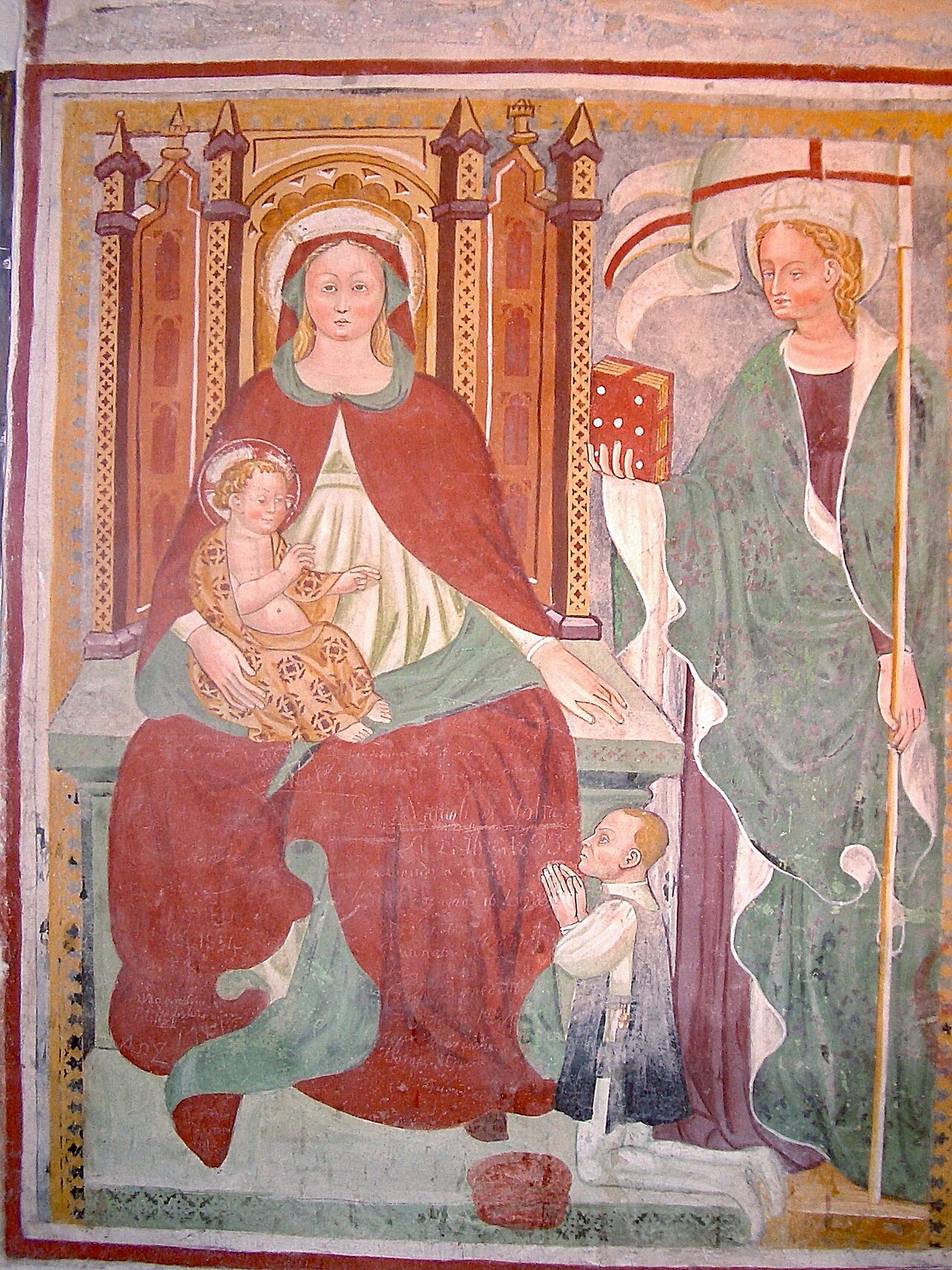
Between the 15th and 16th centuries, an extraordinary family of itinerant artists left an indelible mark on the churches and sanctuaries of the Trentino valleys and much of the eastern Alpine arc. These were the Baschenis, originally from Val Averara in the upper Bergamo area, a lineage of painters who for generations moved from village to village, bringing color and sacred narrative to the bare walls of mountain churches.
The Baschenis: A Dynasty of Painters between Bergamo and Trentino
Between the 15th and 16th centuries, an extraordinary family of itinerant artists left an indelible mark on the churches and sanctuaries of the Trentino valleys and much of the eastern Alpine arc. These were the Baschenis, originally from Val Averara in the upper Bergamo area, a lineage of painters who for generations moved from village to village, bringing color and sacred narrative to the bare walls of mountain churches.
Their work represents today one of the most precious artistic heritages of Val Rendena and western Trentino, a treasure still partly waiting to be rediscovered. The Baschenis painting tradition is part of the phenomenon of itinerant Alpine artists, who with few tools and great talent decorated religious buildings in remote and hard-to-reach areas. The family counted at least seven generations of active painters, an almost unique case in the European artistic landscape, demonstrating the strength of family transmission of artisanal knowledge in Alpine communities.

Simone Baschenis de Averara: The Master of Val Rendena
The most celebrated member of the family was Simone Baschenis de Averara, active in the second half of the 15th century. He is responsible for some of the most important pictorial cycles in the history of Val Rendena, including the famous Dance of Death on the facade of the Church of San Vigilio in Pinzolo, dated 1539. Simone also worked at the Church of Santo Stefano in Carisolo, where he created frescoes of extraordinary narrative vivacity that still amaze today with the freshness of their colors and the expressive power of their figures.
The main characteristics of his style include:
- Vivid and contrasting colors that make scenes immediately readable even from a distance, using high-quality natural pigments
- Expressive figures with faces bearing marked features and theatrical gestures that communicate universal emotions
- Inscriptions in the vernacular accompanying the images, making the message accessible even to the illiterate of the time
- Narrative compositions that unfold like visual stories along the walls, anticipating techniques we would today call cinematic
- Gothic decorative elements blended with Renaissance influences, creating a fascinating and original transitional style
The Dance of Death in Pinzolo: The Baschenis Masterpiece
The most famous work by the Baschenis is undoubtedly the Dance of Death in Pinzolo, a fresco approximately 21 meters long that stretches across the southern facade of the Church of San Vigilio. Painted in 1539, it depicts a procession in which dancing skeletons lead people of every social class toward death: from the pope to the emperor, from the merchant to the peasant, from the young to the elderly.
The message is clear and universal: death is equal for all, regardless of wealth or power. The vernacular inscriptions beneath each figure reinforce this warning with verses of surprising modernity. The fresco is considered one of the finest examples of the Dance of Death preserved in the Alpine arc and attracts scholars and visitors from all over Europe each year. Its position on the exterior of the church makes it visible to everyone, a choice that amplifies its democratic and popular character.
Works by the Baschenis in Val Rendena and Surroundings
Beyond Pinzolo, the Baschenis left traces of their talent in numerous locations throughout the valley and the Giudicarie area. Their body of work in western Trentino constitutes a true open-air museum, an artistic itinerary that crosses villages, valleys, and mountain landscapes. Among the main sites:
- Church of Santo Stefano in Carisolo — frescoes depicting scenes from the life of Saint Stephen and the Passion of Christ, considered among the best preserved in the region
- Church of San Vigilio in Pinzolo — the Dance of Death and other interior decorative cycles with biblical scenes and figures of saints
- Church of San Lorenzo in Vigo Rendena — fragments of frescoes attributed to the workshop, recently restored
- Churches in Val di Sole and Val di Non — numerous works scattered throughout western Trentino, testifying to the wide range of the family's activity
- Votive chapels along the trails — small devotional frescoes that dot the mountain paths of the valley
The Artistic Legacy of the Baschenis Today
Today the Baschenis are recognized as one of the most important artistic families of the Alpine Renaissance. Their works attract scholars and visitors from all over Europe, contributing to cultural tourism in Val Rendena. The Adamello Brenta Nature Park and the valley municipalities have invested in the promotion of these masterpieces, with themed routes and multilingual information panels that guide visitors through the discovery of Baschenis art.
In recent decades, major restoration campaigns have brought to light colors and details obscured by centuries, restoring the frescoes to their original brilliance. Researchers from the universities of Trento, Padova, and Milan have conducted in-depth studies on painting techniques and materials used, contributing to a better understanding of this unique artistic tradition.
For those visiting Val Rendena, an itinerary dedicated to the Baschenis represents an unmissable experience that combines art, history, and landscape in a unique journey through the heart of the Dolomiti di Brenta. Access to the churches is generally free and open to the public, making this heritage accessible to all visitors.

How to Visit the Works of the Baschenis
To organize a visit to the Baschenis works in Val Rendena, here are some practical tips:
- Best time: the churches can be visited year-round, but in summer opening hours are longer and the weather favors walking between sites
- Starting point: Madonna di Campiglio or Pinzolo, from which all churches can be easily reached with short trips by car or on foot
- Duration: half a day for an essential itinerary covering the two main churches, a full day for a complete route including the smaller chapels
- Combinations: the tour pairs perfectly with an excursion to Val Genova or a walk along the Sarca River
- Local guides: booking a guided tour is recommended to fully understand the iconographic and historical significance of the frescoes